Hugo Schwarz · 25 October 2026
Charting the impact of regional wind events on the spread of native plant species in inland valleys using long-term ecological surveys
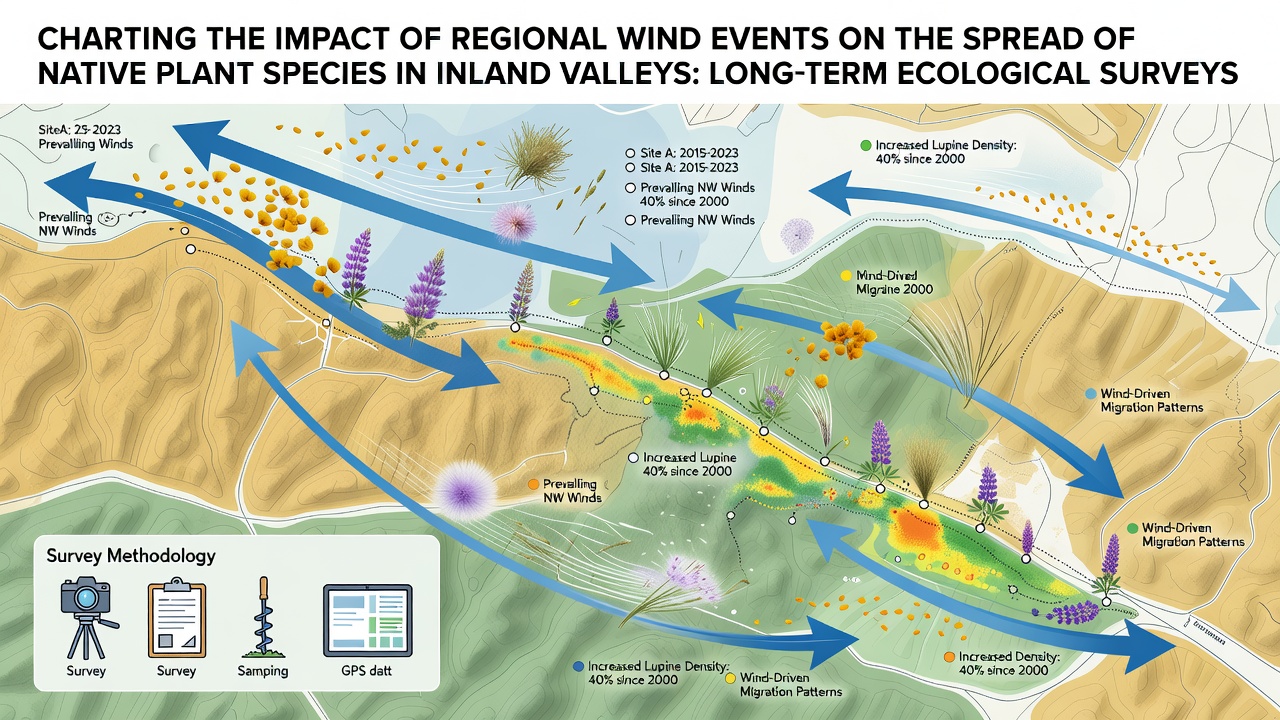
Long-term ecological surveys have tracked how regional wind events influence seed dispersal and establishment of native plant species across inland valleys in multiple regions, and researchers compile these datasets to identify consistent patterns over decades. Surveys conducted in valleys such as those in teh western United States and parts of southeastern Australia reveal that wind gusts above certain thresholds carry seeds farther than previously estimated, which expands population ranges during specific seasons. Data from monitoring stations show that autumn wind patterns often align with peak seed release periods for grasses and forbs, creating measurable shifts in vegetation cover recorded through repeated transects adn quadrat sampling.
Survey Methods and Data Collection Approaches
Teams deploy standardized protocols that include annual mapping of plant occurrences alongside meteorological records, and these efforts span from the 1980s through projections into 2026. Observers note wind direction and speed using anemometers placed at multiple elevations while collecting soil samples to assess seed viability after dispersal events. Studies indicate that combining remote sensing with ground-truth verification allows detection of subtle changes in species density, particularly where wind corridors form between valley ridges. In one ongoing project researchers cross-reference historical logs with satellite imagery to quantify how single storm systems redistribute seeds across distances exceeding several kilometers.
Observed Patterns in Seed Dispersal and Establishment
Regional wind events such as downslope gusts and valley breezes correlate with increased seedling recruitment for wind-adapted species including certain Asteraceae and Poaceae members, according to aggregated survey results. Figures reveal that years with elevated wind frequency show higher rates of new colony formation on leeward slopes, while sheltered areas retain denser stands of older plants. Long-term records demonstrate that native species with lightweight achenes respond more readily to these conditions than those with heavier propagules, and this distinction appears consistently across surveyed sites in both North American and Australian inland settings.
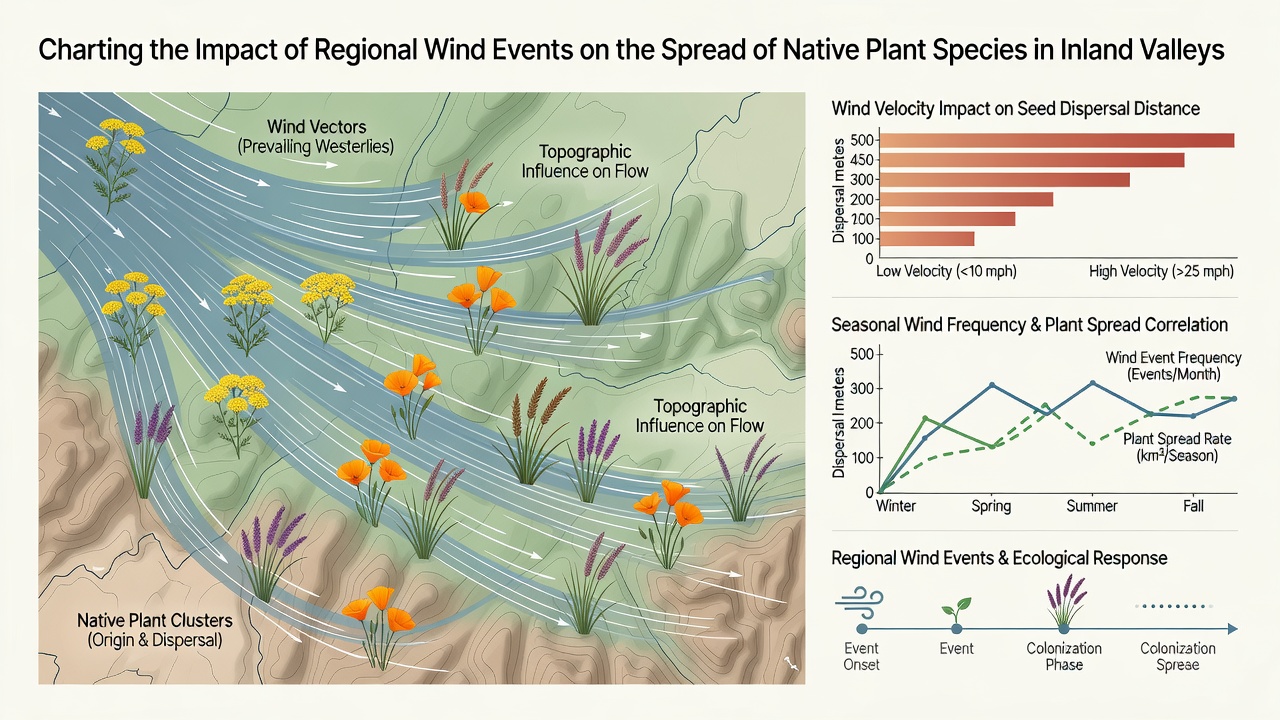
Monitoring data collected through 2025 and into October 2026 highlight seasonal variations, with spring wind events contributing to upslope migration in some valleys and autumn events driving lateral spread along valley floors. Researchers have documented cases where post-wind-event surveys recorded new occurrences of species previously limited to windward edges, and these expansions persist when followed by adequate moisture. Evidence suggests that cumulative effects over multiple seasons compound range shifts, producing gradual but measurable alterations in community composition documented through repeat photography and census plots.
Regional Comparisons and Contributing Factors
Comparative analysis across different inland valley systems shows that topography modulates wind effects, with narrower valleys channeling gusts more effectively and thereby facilitating longer-distance dispersal. According to reports from environmental agencies, soil type and existing vegetation density interact with wind patterns to determine successful establishment, and surveys in California’s Central Valley alongside those in the Murray-Darling Basin illustrate these interactions through side-by-side data. Wind events coinciding with drought periods produce different outcomes than those occurring after rainfall, as dry conditions reduce germination rates despite seed arrival.
Additional variables tracked in the surveys include herbivore activity and human land use, which researchers factor into models that isolate wind contributions. Data from these integrated studies indicate that areas with minimal disturbance exhibit clearer signals of wind-driven spread, and this finding supports targeted conservation planning in less modified valley sections. Observers note that extreme wind events, though infrequent, produce outsized effects on species distribution compared to average seasonal winds, and long-term datasets capture these rare occurrences effectively.
Integration with Broader Ecological Monitoring
Long-term surveys feed into larger databases maintained by institutions such as the U.S. Geological Survey and similar bodies in other countries, allowing cross-validation of wind impact findings. These compilations reveal that native plant responses to wind vary by species functional traits, with some showing resilience while others decline under altered wind regimes linked to climate trends. Monitoring continues to refine predictive models that incorporate wind event frequency, intensity, and timing to forecast future distribution changes in inland valley ecosystems.
Conclusion
Comprehensive records from decades of ecological surveys demonstrate clear linkages between regional wind events and the spatial dynamics of native plant species in inland valleys, providing a foundation for ongoing assessment through 2026 and beyond. Continued data collection supports refined understanding of dispersal mechanisms and informs management strategies that account for these natural processes across varied geographic contexts.